My Work

Common Challenges. Distinct Contexts.
Meaningful Progress.
Every institution is unique, but many face similar challenges.
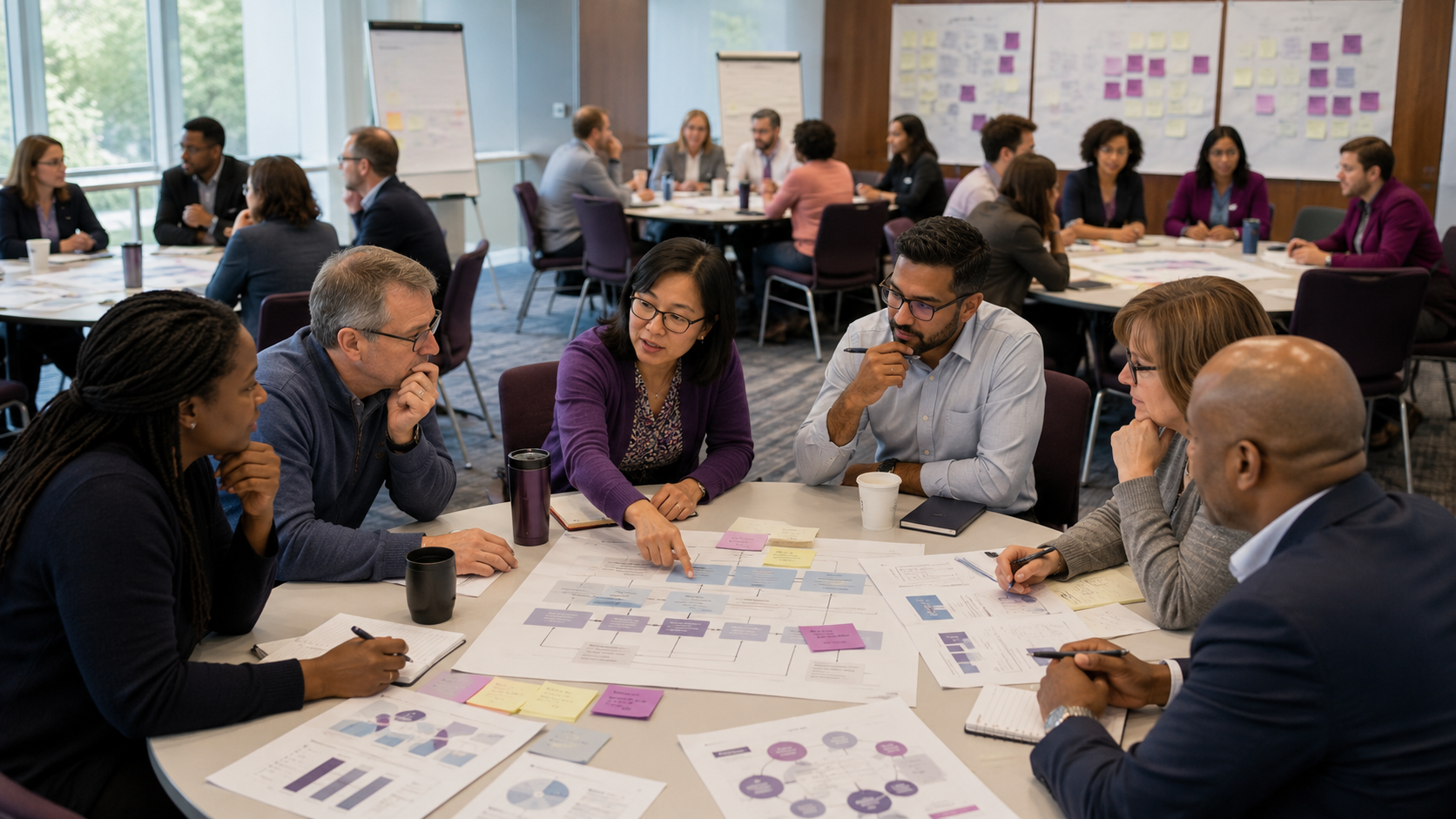
Over the course of my career, I have worked across multiple sectors of higher education—from small private colleges and regional comprehensive universities to large public research institutions, state systems, and national initiatives. These experiences have provided a unique opportunity to observe how common challenges emerge in different contexts and how institutions adapt strategies to meet their own missions, students, and circumstances.
Whether improving student outcomes, navigating organizational change, strengthening leadership capacity, or translating research into action, the work described below reflects recurring themes and representative engagements that have shaped my practice and perspective.
Improving Student Success Through
Course Scheduling
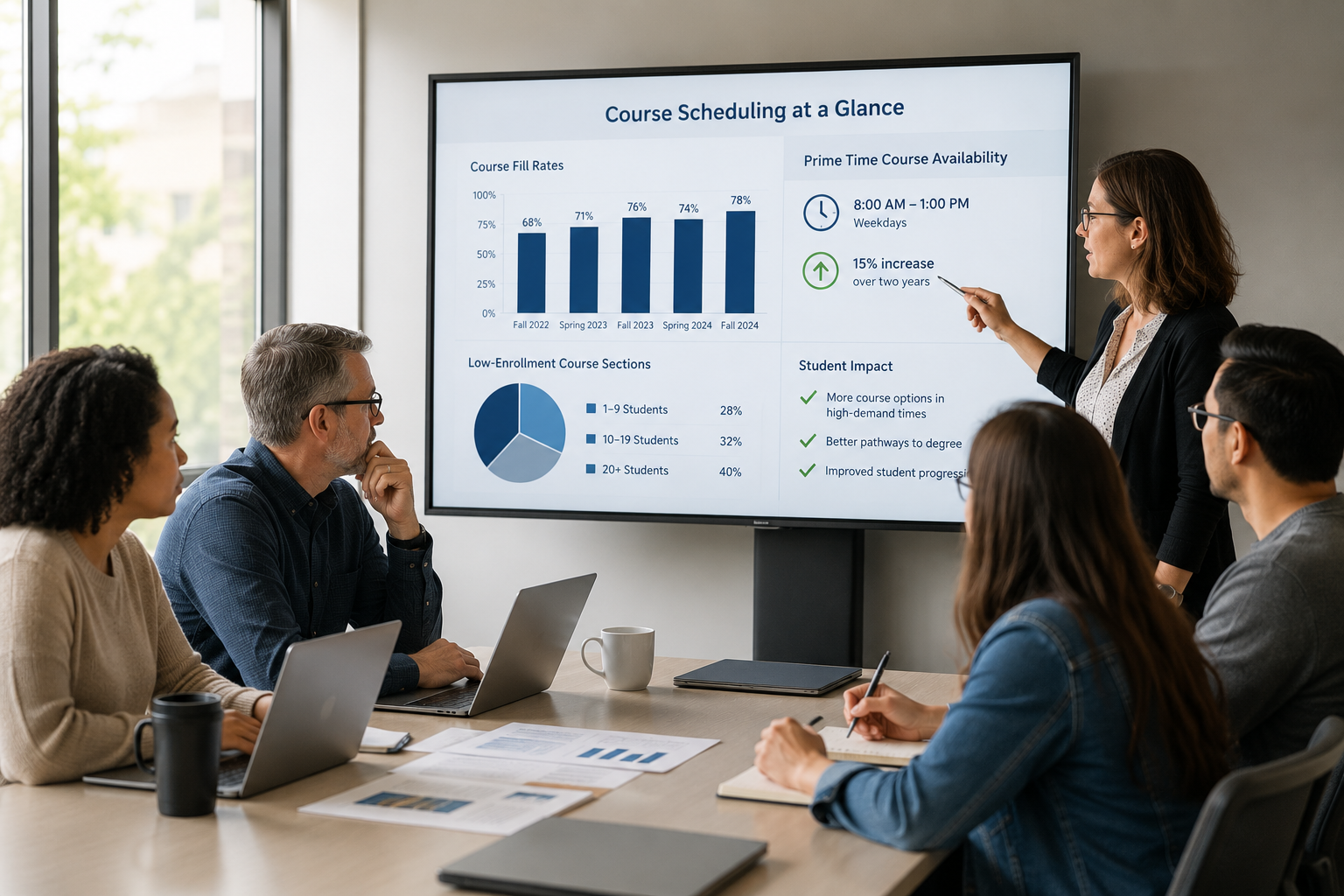
Over the past several years, a significant portion of my work has focused on the intersection of course scheduling and student success.
Through a multi-year initiative with the American Association of State Colleges and Universities (AASCU), I have worked alongside institutional teams from across the country as they examined how scheduling practices, policies, and decision-making processes influence student progression, momentum, and degree completion.
This work has included facilitating cross-institutional learning experiences, developing tools and frameworks for institutional inquiry, supporting policy and practice reviews, and helping teams translate data and stakeholder feedback into actionable change strategies.

Redesigning Academic Pathways & Learning Experiences
Gateway courses, developmental education, academic support services, and curriculum design play an important role in shaping how students experience an institution and navigate their academic journeys.
Work in this area has included faculty academies focused on gateway course redesign, curricular innovation efforts, developmental and corequisite education initiatives, and institutional planning designed to strengthen academic pathways. Across these engagements, a common theme has emerged: meaningful improvement often requires examining not only what students learn, but how institutional structures, policies, and support systems influence their experience along the way.
Building Leadership Capacity for Change
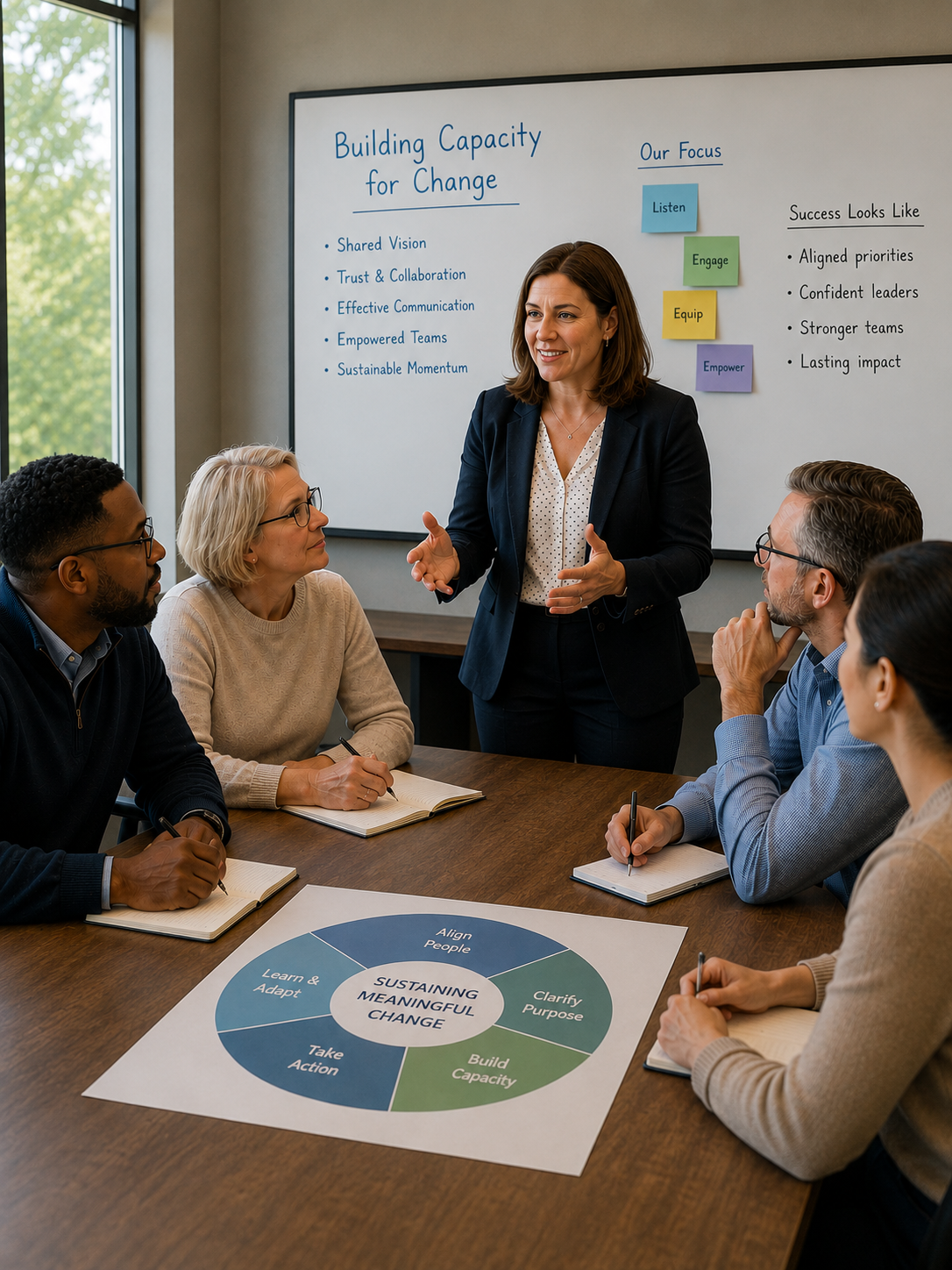
Institutional change efforts often succeed or stall based on an organization's ability to align people, navigate complexity, and sustain momentum over time.
Work in this area has included supporting multi-year institutional improvement initiatives, facilitating leadership development experiences, designing cohort-based learning communities, and helping cross-functional teams translate strategic priorities into coordinated action. Across these engagements, a recurring lesson has emerged: lasting change depends not only on sound strategy, but also on the capacity of leaders and teams to implement, adapt, and learn together.
Facilitating Cross-Institutional Learning & Collaboration
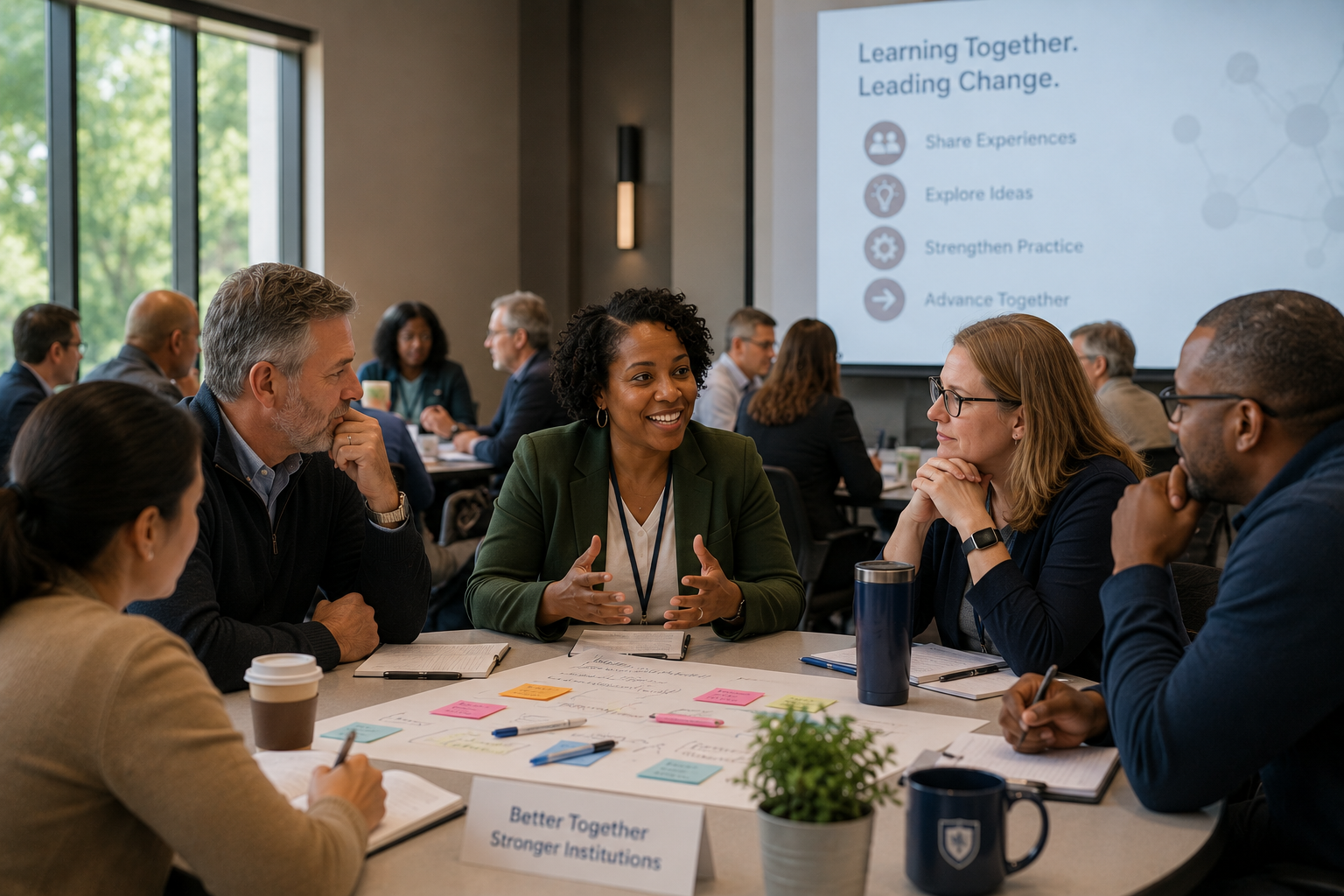
Some of the most meaningful learning occurs when institutions have opportunities to share experiences, test ideas, and learn from one another.
This area of work has included designing and facilitating national and statewide learning networks, cohort-based improvement initiatives, professional development academies, and peer learning communities. These engagements have brought together leaders, faculty, and practitioners from diverse institutional contexts to explore common challenges, exchange emerging practices, and accelerate learning through collaboration.
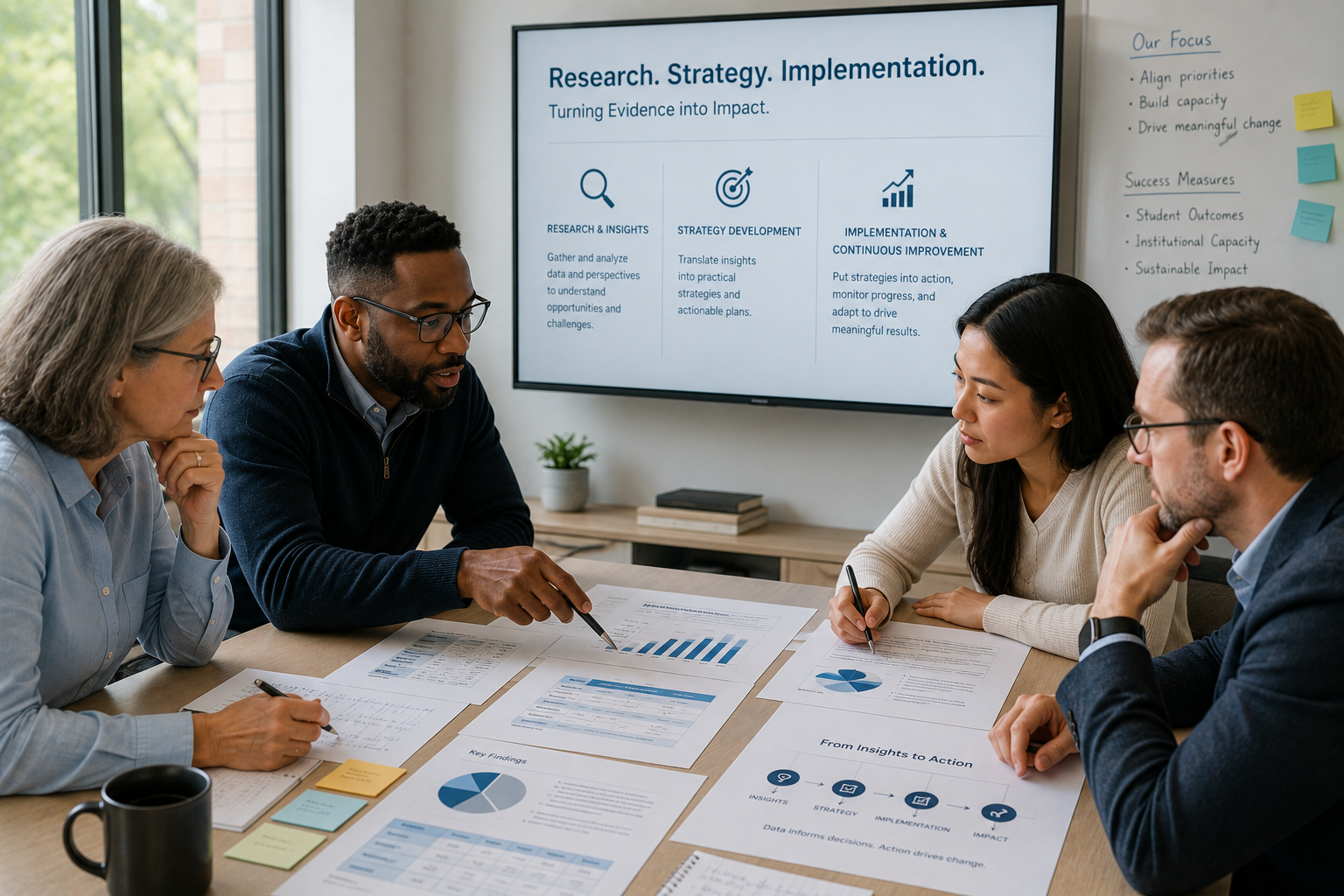
Research, Strategy, & Implementation
Research and data become most valuable when they help organizations make sense of complex challenges and identify practical pathways forward.
Work in this area has included translating research into actionable frameworks, synthesizing stakeholder feedback, developing strategic resources, and supporting institutional and system-level planning efforts. Across these engagements, a recurring theme has emerged: evidence alone rarely creates change. Meaningful improvement requires connecting insights to decisions, implementation, and continuous learning.